



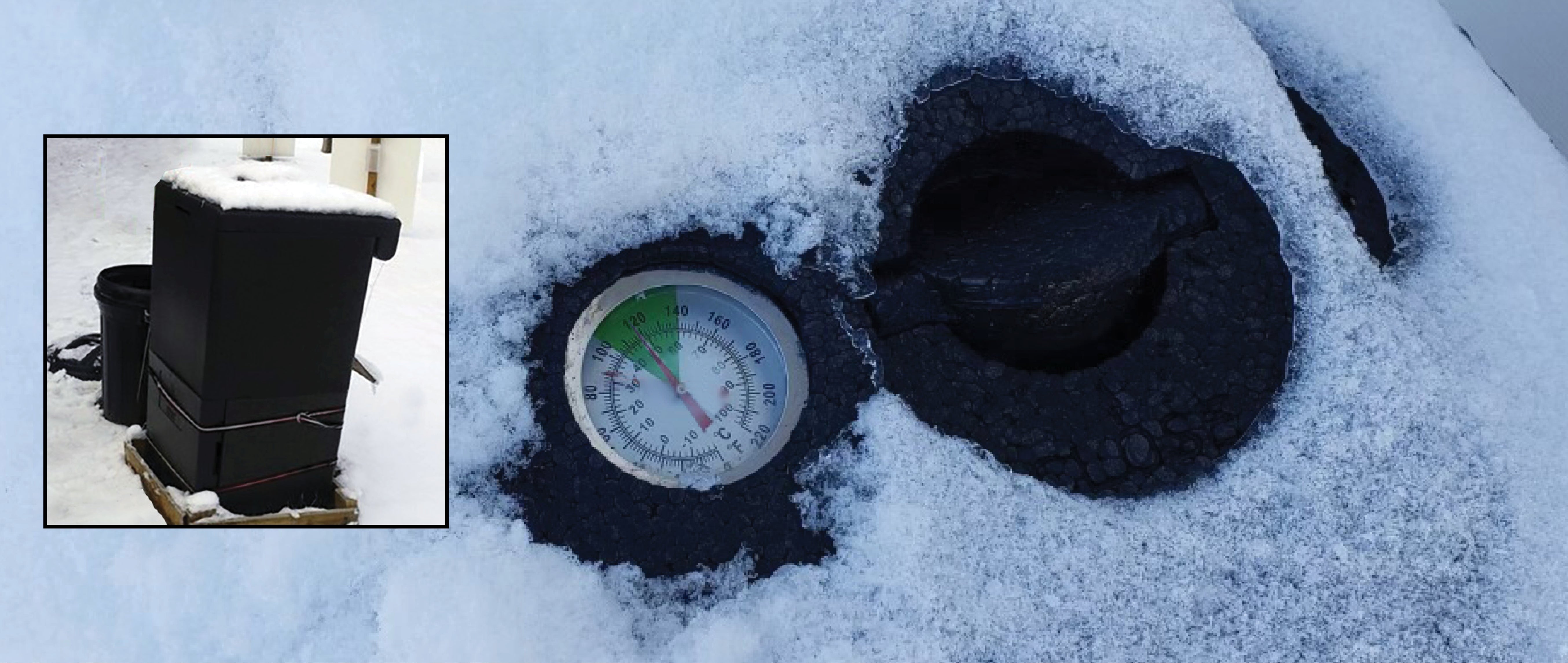
Many people assume composting must pause once temperatures drop. The discussion often centers on whether decomposition truly stops or simply slows down—and how insulated systems, such as HOTBIN, can keep the process active.
Feedback from HOTBIN customers in northern states, where winters can be especially harsh, shows that they continue feeding their composters year-round. While they occasionally experience difficulty opening the lid during extreme cold due to frozen condensation, they report success by adding material consistently and using the HOTBIN Kick-Start bottle when temperatures rise above freezing.
Their experience shows that once the bacteria have enough food, the compost heats up quickly. In many cases, this reactivation of the decomposition process happens naturally—even in the middle of winter.
Cold-weather challenges
Common concerns include:
- Frozen food waste
- Slower breakdown of materials
- Difficulty turning or mixing compost
· Managing moisture when snow and ice are present
These conversations usually lead to reassurance that winter composting is possible with small adjustments.
- Smell and pests (or lack of them)
- Interestingly, winter composting discussions often note fewer pest and odor issues, since cold temperatures naturally reduce activity from rodents and insects.
- Active” vs. “passive” winter composting
People debate whether to:
- Actively manage (regularly feeding) the bin (balancing greens/browns, occasional mixing),or following the suggested feeding mix if you have a HOTBIN.
- Simply add materials and let nature slow things down until spring
Both approaches are discussed as valid, depending on the system used. If you have a HOTBIN, just continue to follow our suggested feeding quantities/mix and expect the bacteria to re-start the process at any time, even in the coldest of winter.
Although the composting process may slow down or temporarily stop during cold weather, regular feeding helps sustain the system. If users continue adding materials as recommended, the bacteria can restart the composting process at any time—even during the coldest part of winter.
Insulated and hot composting systems
There’s growing interest in composters designed to retain heat. Many experienced composters share firsthand stories of continuing to compost year-round by:
- Pre-chopping food waste
- Adding more carbon (paper, cardboard, wood chips)
- Using insulated bins that maintain internal warmth
Environmental motivation
A strong theme is not wanting to send food waste to landfill during winter, when municipal composting programs may pause or be limited.
Overall, the tone of these conversations has shifted from “Can you compost in winter?” to “Here’s how to compost successfully in winter.”
Winter may change the rhythm of composting, but it doesn’t silence it. For HOTBIN users facing snow, ice, and sub-freezing temperatures, success comes from consistency, patience, and understanding the process rather than fighting it. Even when lids freeze shut or microbial activity slows, the composting cycle continues beneath the surface, ready to accelerate as soon as conditions allow.
These real-world experiences remind us that composting is not a fair-weather practice—it’s a year-round commitment that, with the right system, thrives in every season. Click to learn more at this website.


