



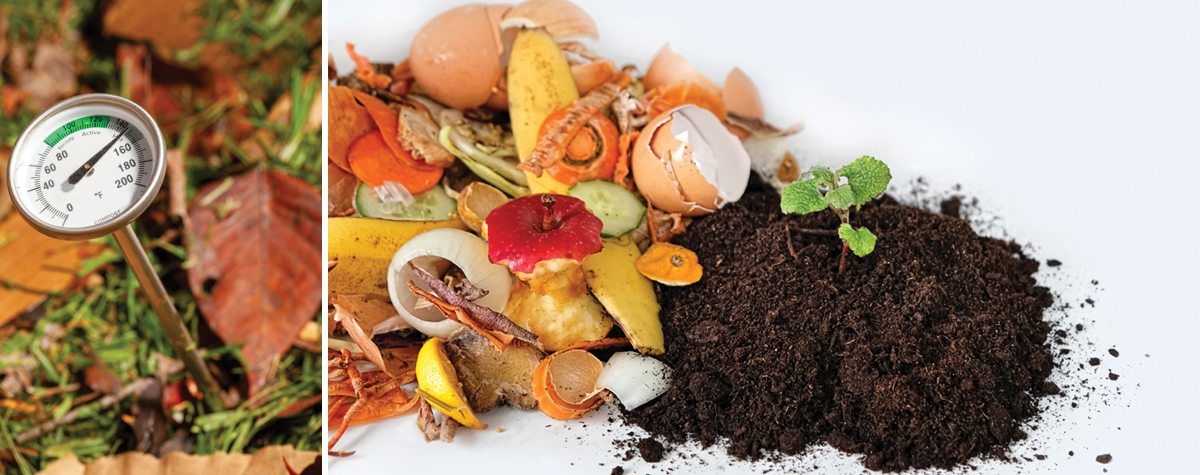
As the team behind HOTBIN Composters, it would be easy to say that hot composting is always the better option. However, the real goal is to help gardeners understand the difference between hot and cold composting so they can choose the method that best suits their home, lifestyle and composting goals.
The truth is that both methods can produce excellent compost. The main difference lies in speed, efficiency, waste capacity and the quality of the finished material.
What Is the Difference Between Hot and Cold Composting?
The biggest difference between hot and cold composting is the temperature at which decomposition takes place.
Hot composting relies on active bacteria generating temperatures between 104°F and 140°F, rapidly breaking down food scraps and garden waste. Cold composting, meanwhile, occurs at ambient temperatures and depends on natural decomposition over a much longer period.
Both systems create compost, but the time, effort and waste volumes they can handle are very different.
Choosing the Right Composting Method for Your Lifestyle
When considering the difference between hot and cold composting, the most important question is which option fits your daily routine.
Your decision should depend on:
- The amount of household and garden waste you produce.
- How much space you have available.
- The time you’re willing to spend managing compost.
- How quickly you want finished compost.
- Whether you plan to compost throughout the entire year.
Understanding these factors makes it far easier to choose the right composter and build a sustainable habit that works long term.
When Is Cold Composting the Better Choice?
Cold composting can be ideal if speed is not a priority.
If you have plenty of garden space, smaller amounts of waste, and don’t mind waiting several months for finished compost, a traditional cold compost heap may suit your needs perfectly.
Many gardeners enjoy its simplicity, adding waste gradually and allowing nature to take its course. While slower, it still produces valuable organic matter that benefits soil health and plant growth.
Why Hot Composting Delivers Faster Results
The difference between hot and cold composting becomes particularly noticeable when it comes to efficiency.
Hot composting creates the ideal environment for beneficial bacteria by combining:
- Organic waste.
- Consistent warmth.
- Good airflow.
- Proper moisture levels.
These conditions allow microbes to work dramatically faster, producing rich compost in a fraction of the time compared to traditional methods.
For households generating regular kitchen waste, hot composters offer the ability to continuously add material throughout the year without waiting for previous batches to finish.
How HOTBIN Creates the Perfect Composting Environment
All composting systems rely on the same natural processes, but performance depends on how effectively those conditions are managed.
HOTBIN is designed to optimise the four essential ingredients for successful composting:
- Food waste.
- Warmth.
- Oxygen.
- Water.
The insulated EPP (Expanded Polypropylene) construction naturally retains the heat generated by microbial activity, while the ventilation system encourages airflow and allows excess moisture to escape as steam.
This controlled environment enables bacteria to work up to 32 times faster than in conventional cold compost heaps, producing nutrient-rich compost in as little as 30 to 90 days.
Hot Compost vs Cold Compost: Which Is Better?
There is no universal answer.
If you have ample space, limited waste volumes and no urgency, cold composting can be a perfectly effective solution.
However, if you want to compost food and garden waste continuously, minimise waiting times and create high-quality compost throughout every season, hot composting offers significant advantages.
Understanding the difference between hot and cold composting allows you to choose the system that aligns with your lifestyle rather than simply following one approach over another.
Compact Composting Solutions for Every Household
HOTBIN composters are designed to suit a variety of homes and gardens.
Our larger model holds up to 52 gallons and works well for households of three to five people, while the HOTBIN Mini offers a 26-gallon capacity for one to two-person households.
Both models also include a leachate collection system, allowing gardeners to collect nutrient-rich liquid fertilizer as a valuable by-product of the composting process.
Final Thoughts
The difference between hot and cold composting ultimately comes down to time, convenience and personal goals.
Both methods can transform organic waste into valuable compost, but hot composting offers greater efficiency, year-round performance and faster results. If you’re looking to compost kitchen scraps, garden waste and food leftovers continuously, exploring a hot composting system could help you get more from every load of organic material.


