



One of the most common questions people ask about hot composting is:
“If a HOTBIN reaches high temperatures, doesn’t it kill all the beneficial bacteria?”
The short answer is NO.
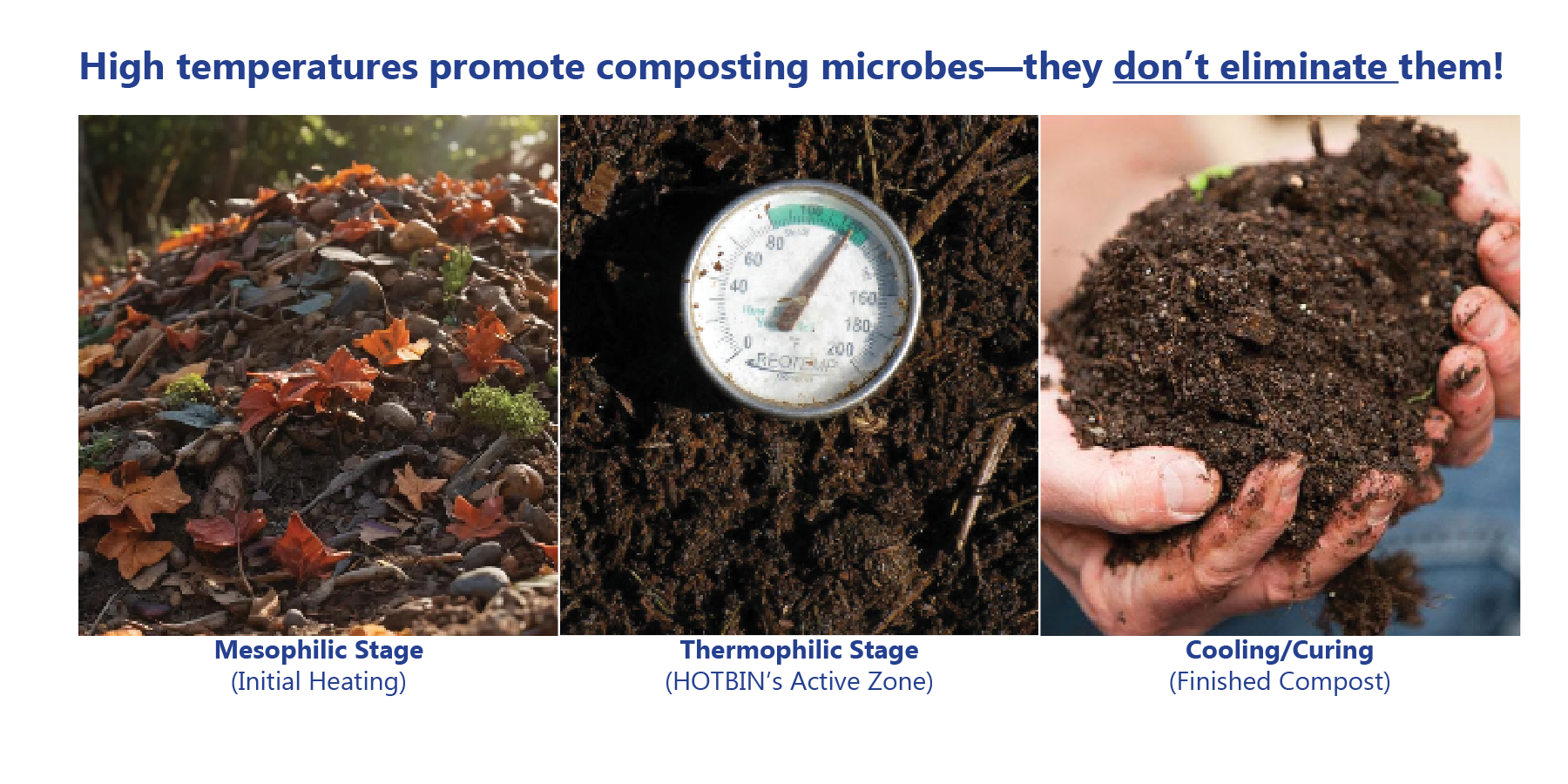
Hot composting does not make compost sterile. In fact, when a HOTBIN is working at around 104-140°F (40-60°C), those high temperatures are a sign that beneficial microorganisms are actively breaking down food and garden waste. Rather than killing the composting process, heat helps drive it.
The confusion usually comes from the idea that all bacteria behave in the same way. They do not. Composting is a living process, and different groups of microorganisms become active at different temperatures.
The Short Answer: HOTBIN Compost Is Not Dead Compost
HOTBIN does not kill all beneficial bacteria.
Instead, it creates the right conditions for thermophilic bacteria, heat-loving microorganisms to thrive. These beneficial microbes are naturally adapted to higher temperatures and play an important role in fast, effective composting.
As the composting process moves through different stages, the microbial community changes. Some organisms become less active as temperatures rise, while others take over. Later, as the compost cools, a wider range of bacteria, fungi and other beneficial organisms return to continue the maturation process.
So, rather than producing “dead” compost, HOTBIN supports a natural cycle of microbial activity.
How Microorganisms Work in Hot Composting
Composting is powered by billions of microorganisms, including bacteria, fungi, actinomycetes and other decomposers. These organisms break down organic materials such as vegetable peelings, cooked food waste, grass clippings, leaves and garden cuttings.
As they feed, they release heat. That heat is not a problem, it is evidence that the composting process is active.
In all composting systems, microbial activity changes over time. The organisms that start the process are not always the same organisms that dominate later on. This is completely natural and is one of the reasons hot composting can work so efficiently.

Stage One: Mesophilic Bacteria Start the Process
When fresh waste is added to a composting system, mesophilic microorganisms are usually the first to get to work.
These microbes prefer moderate temperatures, typically around (68–104°F / 20–40°C). They begin breaking down easier materials such as sugars, soft plant tissue and other simple organic compounds.
As they feed, they generate heat. If the balance of waste, airflow and moisture is right, this heat builds inside the composting mass. In a well-fed HOTBIN, the insulated design helps retain that heat, allowing the process to move into the hot composting phase.
Stage Two: Thermophilic Bacteria Take Over
As the temperature rises above around 100°F, thermophilic microorganisms become more active.
These are beneficial, heat-loving bacteria that are naturally adapted to higher temperatures. They are especially important because they help break down tougher organic materials, including plant fibres, cellulose and mixed food waste.
This is where HOTBIN performs at its best.
When operating correctly, HOTBIN is designed to maintain hot composting conditions of around 104-160°F. This thermophilic phase helps the composting process happen much faster than in a traditional cold compost heap.
Why High Composting Temperatures Are Beneficial
The heat inside a HOTBIN is one of its biggest advantages.
High composting temperatures help to:
- Speed up the breakdown of food and garden waste
- Support thermophilic bacteria
- Reduce many harmful pathogens
- Help control weed seeds
- Keep the composting process active for more of the year
- Produce usable compost much faster than traditional cold composting
This is why the temperature inside a HOTBIN should be seen as a positive sign. It shows that the right microorganisms are active and that the composting process is working.
Does Hot Composting Kill Some Microbes?
Yes, some microorganisms are less active at higher temperatures. But that does not mean the compost is dead or sterile.
Composting is more like a relay race than a single event.
First, mesophilic microbes start the process. Then, as temperatures rise, thermophilic microbes take over. Later, once the easily available food sources have been broken down and the compost begins to cool, other microorganisms return to continue the finishing process.
Each group has a role to play.
The important point is this: hot composting changes which microorganisms are active. It does not remove microbial life altogether.
What Happens When HOTBIN Compost Cools?
As the composting process continues, the most readily available food sources are gradually used up. When this happens, the temperature naturally begins to fall.
This cooling stage is important.
As the compost cools, a wider range of bacteria, fungi, actinomycetes and other beneficial organisms become active again. These organisms continue breaking down more complex materials and help stabilise the compost.
This is part of the natural maturation process. By the time compost is ready to use, it contains organic matter, nutrients and an active microbial ecosystem that can continue to develop once added to the garden.
Is HOTBIN Compost Sterile?
No. HOTBIN compost is not sterile.
Finished HOTBIN compost contains organic matter, nutrients, humus and a developing microbial population. Like all compost, it continues to mature over time, especially once it is added to soil, borders, raised beds or containers.
It is better to think of HOTBIN compost as biologically active compost that has passed through a hot phase. That hot phase helps speed up decomposition and improve compost hygiene, but it does not permanently remove beneficial life from the compost.
Why This Matters for Gardeners
For gardeners, the benefits of hot composting are practical.
A HOTBIN allows you to compost a wider mix of food and garden waste, including cooked food waste once the bin is hot and working correctly. Its insulated design helps maintain the warmth needed for efficient microbial activity, even when outdoor temperatures drop.
The bottom lines is that the finished HOTBIN compost can and is used as a soil improver.
Now that you know the truth about beneficial bacteria and hot composting, why not put the science to work in your own backyard? Explore the HOTBIN range today.
Join thousands of american gardeners who trust HOTBIN to transform food and garden waste into valuable compost—faster than traditional composting methods. Get started today! Website


