



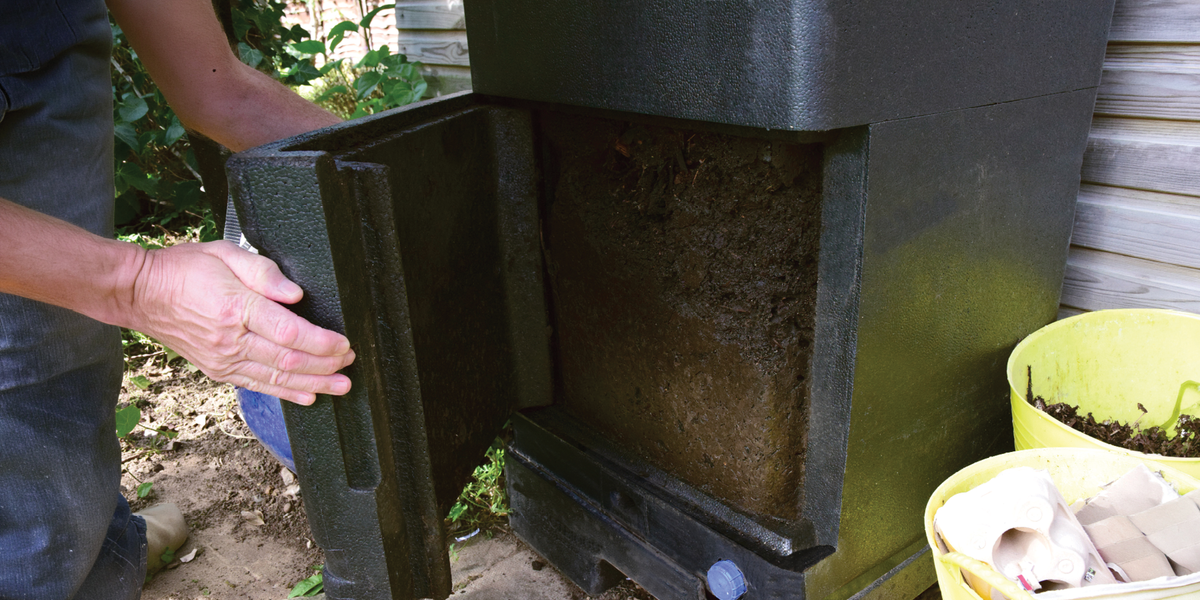
Composting has long been viewed as a luxury reserved for those with sprawling suburban backyards or rural acreage. For urban and suburban households, the desire to recycle food waste and build organic soil typically runs headfirst into severe constraints: tight spatial footprints, strict neighborhood odor tolerances, and the threat of pests. Traditional cold composting piles or open bins simply aren't designed to cope with dense residential environments.
The HOTBIN Composting System directly addresses these hurdles, redesigning waste management specifically around the challenges of modern urban spaces. By trading slow, passive decay for highly engineered aerobic heat retention, the system unlocks clean, rapid food-to-soil conversion.
1. Maximizing Ultra-Compact Footprints
Traditional backyard compost heaps require a massive volume—often at least a 3x3x3 foot footprint—just to trap enough ambient core temperature to decompose properly. Urban patios, small decks, and modern townhome courtyards cannot accommodate that type of land use.
The HOTBIN system bypasses this space requirement through high-performance insulation. Molded from thick, 2-inch Expanded Polypropylene (EPP), the walls retain 96% air matrix insulation, allowing a incredibly compact unit to behave like a massive farmyard compost pile.
- The Space-Saver: The HOTBIN Mini 100 Composter takes up a slim 17” x 17” footprint, sliding effortlessly into tight balcony corners or alleyways.
- The Standard Household: The medium-sized HOTBIN 200 Composter expands to a mere 22” x 22” footprint, managing a family's entire food and yard waste output without dominating outdoor living zones.
2. Absolute Odor Control and Pest Prevention
The number one deterrent to urban composting is the fear of bad odors and the pests they attract, such as rats, raccoons, and swarms of flies. Traditional open bins leak nitrogenous odors when food scraps sit exposed and turn anaerobic.
The HOTBIN manages this environmental nuisance through a completely sealed, specialized aeration system:
- The Bio-Filter Lid: Every unit features an airtight lid equipped with a built-in activated carbon charcoal filter. As heat-loving bacteria generate steam and volatile organic compounds (VOCs), the gas is forced through the charcoal matrix, trapping standard foul odors before they ever reach the outside air.
- Rodent-Proof Construction: Unlike loose plastic panel bins or wire enclosures, a sealed floor plate, secure cam straps, and dense walls create a structural barrier that blocks local wildlife from sensing or gaining entry to food sources inside.
3. Rapid Hot Decomposition (32x Faster)
Standard cold composting processes can take anywhere from 12 to 24 months to produce a finished product because they rely entirely on ambient seasonal temperatures. For households generating a continuous stream of weekly kitchen scraps, a slow bin quickly overflows.
The HOTBIN operates as a natural thermo-reactor. By insulation-trapping the metabolic heat produced naturally by indigenous bacteria, the internal chamber scales up to 104°F to 140°F (40°C to 60°C).
- Speed: This extreme thermal acceleration forces decomposition to occur up to 32 times faster than market cold bins, yielding rich, dark compost in just 30 to 90 days.
- Zero Labor: Because the vertical column design utilizes a engineered aeration base plate to naturally draw oxygen upward, no manual turning or back-breaking tumbling is required. You simply add fresh waste to the top and let the thermal column do the work.
4. Advanced Diversion: Composting What Others Can't
Because urbanites consume a diverse diet, a standard "vegetables-only" composting restriction is incredibly limiting. Cold compost heaps cannot process complex proteins without rotting, smelling, and drawing vermin.
Because the HOTBIN maintains verified internal thermophilic temperatures above 140°F, it thoroughly sanitizes and vaporizes waste types that would ruin a basic garden pile:
- Cooked food leftovers & table scraps
- Meat, fish, and dairy fats
- Small bones and pet waste
- Perennial weeds and invasive seed heads (the heat sterilizes them completely)
5. High-Yield Production of Premium Quality Compost
When you finally extract your organic material from the convenient bottom harvest hatch, you aren't receiving a half-rotted, muddy sludge. The controlled thermophilic cycle encourages specific heat-loving bacteria to flourish, yielding an incredibly uniform, pasteurized, peat-free premium compost.
Furthermore, as high-heat moisture sanitizes the waste, excess liquid drains along a sloped inner base. This condensation collects as a highly concentrated, sterile liquid leachate fertilizer (often called "compost tea") which can be drawn directly from a built-in front valve to feed indoor house plants or balcony container gardens.
|
Feature Comparison |
Traditional Cold Bins |
The HOTBIN System |
|
Average Footprint |
Large |
Ultra-Compact |
|
Decomposition Window |
12 to 24 Months |
30 to 90 Days |
|
Accepts Meat & Cooked Food |
❌ No (Attracts pests & rots) |
Yes (Sanitized by high heat) |
|
Odor Mitigation |
❌ None (Relies on exact carbon ratios) |
Airtight Seal + Activated Carbon Filter |
|
Physical Labor Needed |
High (Requires frequent manual turning) |
⚡ Zero (Hands-free vertical aeration) |
|
Liquid Fertilizer Catch |
❌ None (Leaches directly into ground soil) |
Built-in Leachate Collection Valve |
By choosing a system like the HOTBIN purposely engineered to thrive within tight residential zones, urban dwellers no longer have to compromise between eco-conscious waste diversion and a clean, odor-free home.
Are you trying to figure out which size HOTBIN matches your household's weekly food waste production, or would you like to know what bulking agents are needed to keep the internal heat high?
Find the right HOTBIN composter size for your household and lifestyle by visiting hotbincomposting-us.com


